
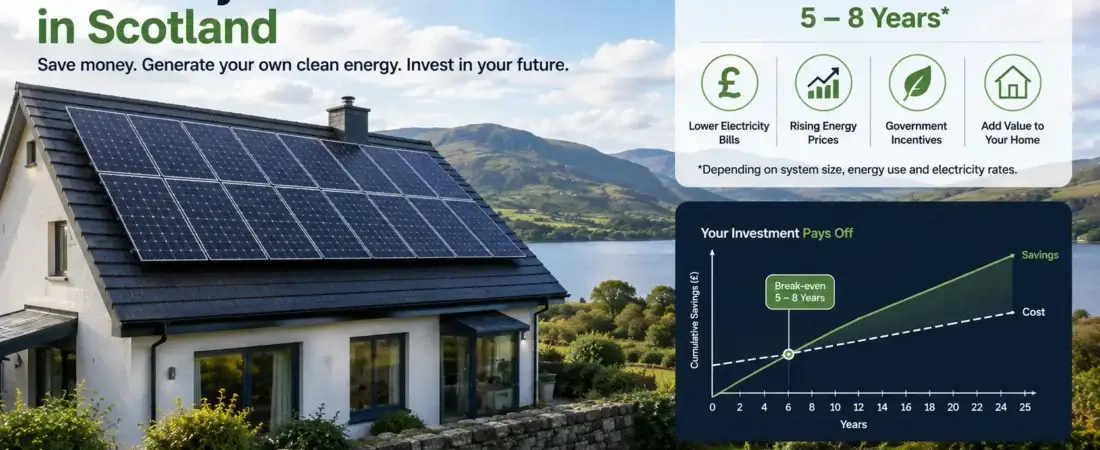
Introduction to the Solar Payback Period
The solar payback period is a critical concept for homeowners considering the installation of solar panels. Essentially, it refers to the duration required for a solar power system to generate enough energy savings to offset the initial costs associated with the purchase and installation of the panels. Understanding this timeframe is vital for homeowners in Scotland as it directly influences the financial viability of solar energy investments.
In Scotland, the solar payback period can vary significantly due to several factors such as geographical location, local climate conditions, and the efficiency of the chosen solar technology. In regions where sunlight exposure is maximized, the solar payback period tends to be shorter. Conversely, locations with limited sunlight may experience extended payback durations, making awareness of these factors crucial for potential investors.
Another consideration is the initial financial outlay required for solar panel installation, which can be substantial. A proper assessment of the solar payback period will help homeowners weigh the benefits against this investment. The quicker the payback, the more appealing the solar energy system will be for households aiming to lower their utility bills and reduce their carbon footprint.
Furthermore, the solar payback period is influenced by available government incentives, grants, and the prevailing energy rates. In Scotland, these factors help to offset the installation costs and may result in a shorter payback duration than initially anticipated. This understanding allows homeowners to make informed decisions about solar investments, ensuring they maximize their return and contribute positively to the environment.
Factors Affecting the Solar Payback Period in Scotland
The solar payback period in Scotland is influenced by a multitude of factors, each playing a significant role in determining how quickly an investment in solar energy can be recouped. One of the primary elements is geographic location. Scotland’s location in the northern hemisphere means it receives less sunlight compared to many other regions. This lower solar irradiance impacts energy output and thereby prolongs the payback period. However, certain areas in Scotland, particularly the Highlands, may benefit from longer hours of sunlight during summer months, providing a counterbalance to the overall lower light conditions.
Average sunlight hours are another critical factor that contribute to the solar payback period in Scotland. On average, Scotland enjoys about 1,300 to 1,400 sunlight hours annually, which can lead to variations in energy generation across different seasons. Solar panels generate significantly more power in the summer; thus, installations must be planned considering these seasonal fluctuations. This seasonal variability can have profound implications for homeowners and businesses trying to calculate their return on investment.
The cost of installation is also pivotal. Prices for solar photovoltaic (PV) systems have generally decreased, but installation costs still represent a considerable investment for consumers. Lower installation costs are preferable, shortening the solar payback period. Furthermore, available incentives and subsidies, such as feed-in tariffs or grants for renewable energy projects, can enhance the financial viability of solar installations. The current pricing of electricity in Scotland is equally essential; higher local electricity prices can lead to faster savings on energy bills, thereby decreasing the payback period.
Lastly, there is a discernible difference in solar payback periods between urban and rural settings. Urban installations may face shading from buildings or have less roof space available for solar panels, pushing their payback period outward compared to rural installations that benefit from open spaces. By considering all these aspects, potential solar investors in Scotland can make informed decisions regarding the financial implications of solar energy adoption.
Benefits and Drawbacks of Solar Power in Scotland
Investing in solar power in Scotland provides numerous advantages that can benefit both consumers and the environment. One significant benefit is the potential for long-term savings on energy bills. Households that install solar panels can, over time, reduce their dependence on conventional energy sources, which can lead to lower monthly electricity expenses. These savings could significantly contribute to the overall solar payback period in Scotland, which measures the time taken for the initial investment to become financially worthwhile.
Additionally, adopting solar energy contributes to a reduced carbon footprint. As Scotland moves towards its renewable energy targets, switching to solar power can help achieve these national goals while promoting environmental sustainability. Furthermore, properties equipped with solar panels may experience an increase in market value. Homebuyers are increasingly aware of the benefits of renewable energy, making properties with solar installations more attractive.
However, the transition to solar energy is not without its challenges. The initial investment costs can be a significant deterrent for many homeowners. Installing solar panels can require substantial upfront capital, which may not be feasible for everyone despite the long-term financial benefits. Moreover, Scotland’s climate presents particular challenges. The country is known for its variable weather conditions, which can affect the efficiency and output of solar energy systems. Reduced sunlight during certain times of the year can extend the solar payback period in Scotland, raising concerns about whether the investment will yield expected returns.
To provide a broader perspective, testimonials from Scottish residents who have embraced solar energy can be insightful. Many homeowners report satisfaction with their decision, highlighting energy savings and the satisfaction of contributing to environmental protection. Others, however, express concerns related to the financial commitment and the performance of their systems.
In summary, while the benefits of solar power in Scotland are compelling, there are notable drawbacks that must be carefully considered by potential investors.
Conclusion and Call to Action
Understanding the solar payback period in Scotland is essential for anyone considering the installation of solar panels. This concept refers to the duration it takes for the energy savings and benefits provided by solar panels to equal the initial investment costs. Key factors influencing this payback period include the initial cost of solar systems, available government incentives, energy prices, and local climate conditions. In a region like Scotland, characterized by its unique weather and sunlight availability, evaluating these factors becomes crucial.
Throughout this blog post, we have examined various aspects that contribute to the solar payback period. It is evident that not only economic factors play a pivotal role, but also individual circumstances such as energy consumption patterns and roof orientation need serious consideration. A thorough assessment will help potential solar panel buyers make informed decisions regarding the viability and effectiveness of solar energy in their specific situation.
As the solar energy landscape continues to evolve, it is important for individuals to conduct further research tailored to their needs. Investigating local solar energy providers and consulting with experts can unveil tailored solutions and insights that address personal energy requirements and financial considerations. It is advisable to seek assessments that take into account the local climate and available incentives, as these can significantly influence the solar payback period in Scotland.
To make an informed decision, readers are encouraged to reach out to local solar energy services or professionals. These consultations can provide the necessary information and tailored advice to determine the best course of action regarding solar installation. Investing in solar energy not only contributes to sustainability efforts but can offer economic rewards, making it a worthwhile consideration for homeowners throughout Scotland.