
Understanding Solar Panels
Solar panels, also known as photovoltaic (PV) panels, play a pivotal role in harnessing the sun’s energy to produce electricity. The fundamental principle behind their operation is the photovoltaic effect, which allows panels to convert sunlight directly into electrical energy. As the world increasingly turns towards sustainable energy solutions, the significance of solar panels has risen dramatically. Homeowners are now considering installations as a way to contribute to environmental conservation while achieving substantial cost savings.
Solar energy offers numerous benefits, primarily its ability to reduce greenhouse gas emissions. By utilizing solar panels, homeowners can significantly decrease their reliance on fossil fuels, thus minimizing their carbon footprint. Additionally, solar panels offer a renewable source of energy that is available in abundance. This transition to renewable resources not only aids in powering homes but also contributes to global efforts aimed at combating climate change.
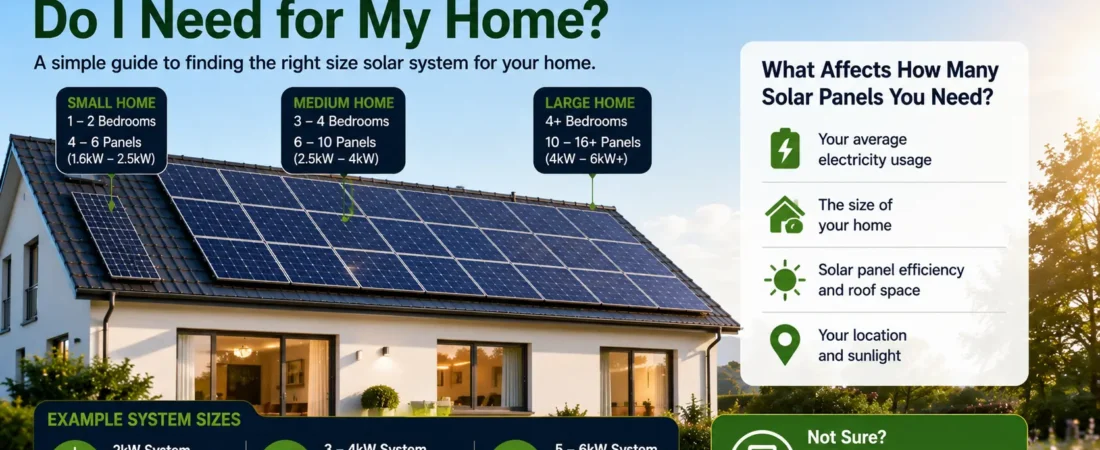
One of the most appealing aspects of solar panels is their potential to lower energy bills. Many homeowners inquire, “how many solar panels do I need for my home?” This question is crucial as it impacts both the initial investment and the long-term savings realized from reduced utility costs. The number of required panels depends on various factors including home size, energy consumption, and geographical location. By properly assessing these variables, homeowners can optimize their solar setup for maximal efficiency.
As more people seek to understand and adopt solar energy, discovering how solar panels function and their profound effects on the environment and personal finances becomes increasingly relevant. This introduction will serve as a foundation for homeowners contemplating the installation of solar energy systems, guiding them in making informed decisions regarding their energy future.
Calculating Your Energy Needs
To determine how many solar panels you need for your home, the first step is assessing your energy consumption. Regularly monitoring your electricity usage is crucial, and one effective way to do this is by examining your monthly energy bills. Most electricity bills provide a detailed breakdown of your energy consumption in kilowatt-hours (kWh).
Next, calculate the average monthly electricity usage. This can be done by taking the total kWh from several bills (preferably over a year) and dividing it by the number of months. For instance, if your total annual usage was 12,000 kWh, your monthly average would be 1,000 kWh. This figure serves as a baseline for determining how many solar panels are necessary for your home.
Another important consideration involves your household size, lifestyle, and location. Larger homes with more occupants typically require more energy than smaller ones. Additionally, geographical factors play a significant role; areas with more sunlight will yield more energy from each solar panel installation. Also, consider your home’s energy efficiency. If your home uses energy-efficient appliances, the demand will be lower, impacting the number of solar panels needed.
To streamline this process, various online calculators exist that can provide estimations based on specifics like your location, energy needs, and the average sunlight in your area. If unsure, consult a solar energy provider who can conduct a professional assessment. With this information in hand, homeowners can accurately calculate how many solar panels they need for their homes, tailoring the solution to their unique circumstances and contributing to a more sustainable future.
Factors Affecting Solar Panel Efficiency
Determining how many solar panels do I need for my home involves understanding various factors that influence the efficiency of these systems. One of the most significant factors is geographical location. Regions that receive ample sunshine throughout the year tend to produce more solar energy, thus requiring fewer panels to meet energy needs. For instance, areas in the southwestern United States typically witness higher solar yields compared to northern regions, which often experience longer winters and less sunlight.
Roof orientation and angle also play critical roles in solar panel efficiency. Ideally, solar panels should face south to capture the most sunlight during the day. However, in certain locations, east or west-facing installations may be more convenient without compromising efficiency drastically. The pitch of the roof can similarly affect energy generation, with steeper angles potentially maximizing sunlight absorption.
Additionally, shading issues can significantly hinder solar panel output. Surrounding trees, buildings, and other structures can create shade, reducing the overall production of the panels. Homeowners should assess their property for any potential shading problems and consider trimming trees or adjusting panel placement to ensure optimal sunlight exposure. Conducting a thorough site assessment before installation is crucial in determining the best configuration for solar panels.
There are various types of solar panels available, each with different efficiencies and outputs. Monocrystalline panels tend to offer higher efficiency rates, while polycrystalline panels can be a more budget-friendly option. As such, understanding the differences and tailoring the type of panel to specific conditions can greatly influence energy needs.
In conclusion, several factors, including geographical location, roof orientation, shading, and the type of solar panels, impact the efficiency of solar setups. By evaluating these elements, homeowners can make informed decisions when determining how many solar panels do I need for my home to achieve optimal energy production.
Conclusion and Next Steps
Determining how many solar panels you need for your home is a fundamental step toward optimizing your energy usage and easing your utility expenses. Throughout this article, we have emphasized that understanding your household’s energy requirements is critical. This entails evaluating your average energy consumption, which can be found on your utility bills, and considering factors such as your geographic location, roof orientation, and shading that might impact the efficiency of solar panels.
Once you have a clearer idea of your energy needs, consulting with a professional installer can provide you with an accurate assessment tailored to your home. These experts can help calculate the optimal number of panels based on your specific situation and recommend the best types of solar panels for installation. Additionally, they can provide insights into energy storage options if you are looking to enhance your solar setup further.
When considering solar energy, it’s also beneficial to seek quotes from multiple solar providers. This not only allows for price comparison but also enables you to gauge the quality of service and the different financing options available. Furthermore, familiarize yourself with local solar incentives, such as tax credits or rebates, which could significantly reduce installation costs. Staying informed about government policies and local programs can enhance the financial viability of your solar panel investment.
In conclusion, embracing solar energy technology is an effective way to contribute to a sustainable future while potentially saving on electricity costs. By understanding your personal energy requirements, consulting professionals, and exploring available options, you can make an informed decision on how many solar panels do you need for your home and take significant steps towards energy independence.